


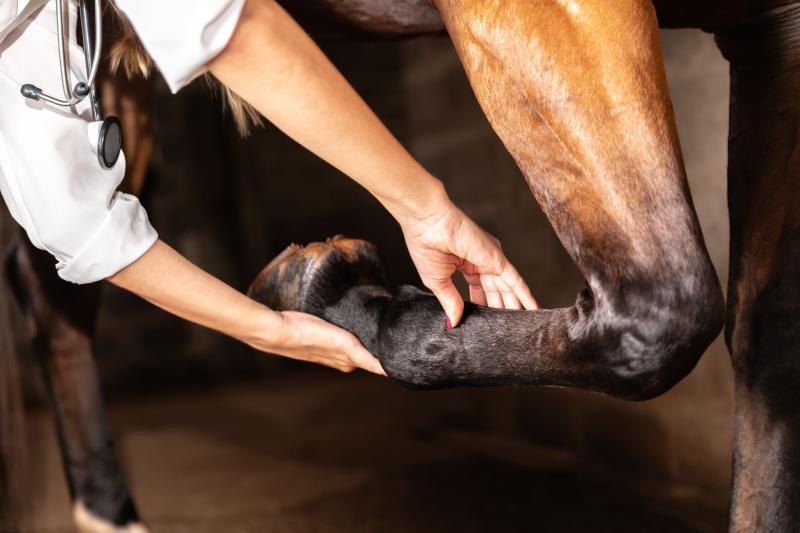
Hoof problems are much more common than you might think; various pathologies can affect the equine hoof, hindering locomotion and the possibility of a healthy and active life. All of this can be avoided with a few simple tips.
The most common hoof problems are:
Frog Rot
Frog rot is an infectious disease that causes the decomposition of the frog, the triangular-shaped pad on the underside of a horse's hoof. It is caused by bacteria that thrive in damp, dirty environments, such as stables with feces and urine, resulting in a foul odor and deterioration of the hoof tissue. Treatment usually involves hygiene, disinfection, and removal of the affected tissue by a veterinarian or farrier.
Hematoma
Usually caused by stepping on a rock (common on hiking trails). It rarely causes severe lameness, but it can develop into an abscess. In that case, the best remedy is left for a few days.
Fissure
A crack that appears vertically in the horse's hoof. It can extend from the hoof wall in contact with the ground, upwards towards the coronary band, or downwards towards the hoof wall. The cause is usually dry hoof with a brittle toe, improper hoof trimming, or trauma. In this case, the farrier intervenes. They create a perpendicular groove to prevent the fissure from extending up to the coronary band. They may also use staples to prevent the fissures from widening.
Laminitis
This is an inflammation of the laminae that support the bone within the horse's hoof. It is caused by factors such as excess weight, inadequate diet, diseases (such as colic, pneumonia), excessive physical exertion, and overloading of a limb. Symptoms include intense pain, difficulty walking, and changes in the animal's posture.
Hoof Wall Detachment
Hoof detachment or "anthill" in a horse's hoof refers to a condition where there is a separation of the hoof wall from the white line, allowing germs and air to enter. Popularly, it can also describe "dry thrush," an anthill-like cavity, which can be a form of hoof disease. The condition requires veterinary treatment to prevent complications such as hoof loss.
Abscesses
Generally, it is very painful and causes severe lameness. Usually, the veterinarian or farrier tries to trim the sole until they reach the abscess.
How often should you trim or shoe your horse's hooves?
Summer
Trimming or shoeing hooves is recommended at least every 6 to 8 weeks during the summer. Competition horses may need more frequent trimming.
Winter
Because horses' hooves grow more slowly in winter, you should trim or shoe them every 6 to 12 weeks. This interval may vary from horse to horse, depending on the growth of their hooves.
Maintaining Balanced Hooves
Horses with balanced hooves move better and experience less stress and tension in their bones, tendons, and ligaments. The ideal hoof has:
Routine hoof care is essential for a horse's health; a healthy hoof begins with regular maintenance. Regular hoof trimming and good shoeing, along with hoof lubrication at least once a week, can help keep your horse healthy and performing well.
Another very important and often neglected factor is good nutrition. Quality nutrition can help prevent various hoof problems.
Research conducted by the University of Minnesota shows that products with certain specific drugs help significantly improve hoof health.
A complete supplement that can be used is Red Cell; it has the best formulation to replenish all the vitamin and mineral levels that the horse needs, improving body conformation, musculature, hooves, coat, and mane.
