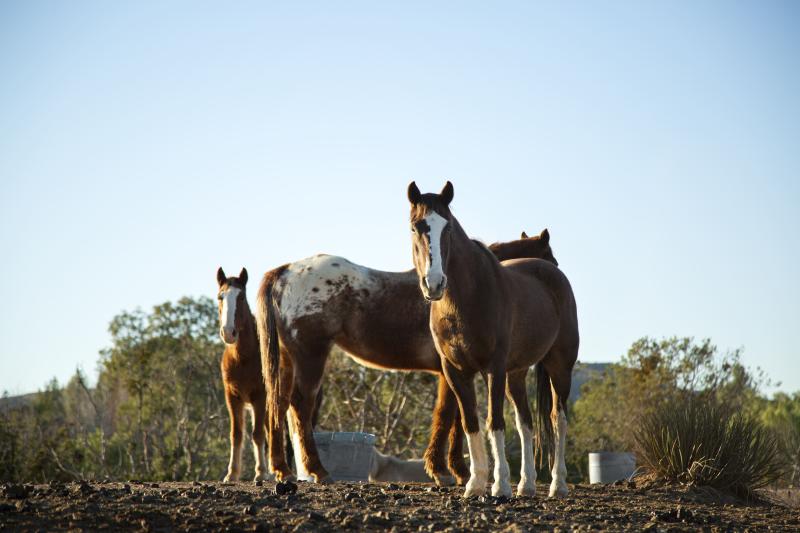
Summer for horses
16/12/2025
The importance of taking care during hot weather.
The heat is a dangerous season for horses. They cool down mainly through sweating, but suffer from heat stress quite frequently, especially stabled horses.
Dehydration and even heatstroke in high temperatures, especially with high humidity or physical exertion, are common symptoms in equines. Warning signs include panting, lethargy, excessive or absent sweating, hot and dry skin, and rapid heartbeat. It is crucial to provide plenty of fresh water, shade, reduce exercise during peak hours, and consider bathing, in addition to paying attention to food and mineral salts, seeking a veterinarian if heatstroke is suspected.
Signs of heat stress
- Breathing: Panting and rapid (above 20/min).
- Heart: Elevated heart rate (above 50 bpm).
- Sweating: Excessive or insufficient sweating (anhidrosis).
- Body: Hot and dry skin, rectal temperature > 39°C.
- Behavior: Restlessness, depression, lethargy, and stumbling.
- Hydration: Dry mucous membranes, prolonged skin tenting, dark or reduced urine.
Factors that worsen the heat:
- High humidity, which hinders sweat evaporation.
- Dark coats, which absorb more heat.
- Breeds from cold regions (such as Icelandic horses).
- Strong sun and lack of wind.
Care and prevention:
- Water and Salts: Constant access to fresh water and salt (salt block) to replenish electrolytes lost in sweat.
- Shade and Ventilation: Provide shade (trees, sheds) and ensure good ventilation in shelters.
- Exercise: Avoid strenuous exercise during the hottest hours. Reduce intensity or skip activities if the heat/humidity combination is high (e.g., >82°C on the heat index).
- Cooling: Cold water baths and sweat scrapers are effective in lowering body temperature.
- Feeding: Adjust diet and offer supplements if necessary.
- Monitoring: Watch for signs of stress and seek veterinary attention immediately if you suspect heatstroke, as it is an emergency.