


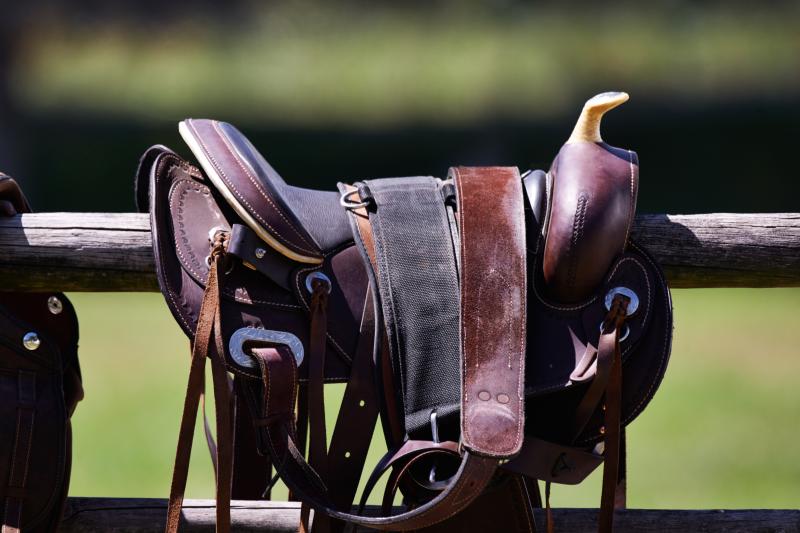
Today we're bringing you an article in partnership with Farnam Horse, which will help you extend the life of your tack.
Thousands of years ago, someone discovered that tying a piece of animal hide to a horse's back made riding more comfortable. Saddles have evolved significantly since those early primitive versions, becoming an item that transcends mere aesthetics and has become functional for various disciplines. And the price has also evolved; good saddles are expensive, and with that in mind, we're going to give you some important tips.
Horse owners today tend to invest significantly in tack and equipment. A quality, well-made saddle should last much longer than the horse you're riding. With proper care, it can easily last a lifetime.
So, what exactly is considered proper care when it comes to leather saddles? For practical advice, we turned to the experts at Circle Y Saddles, Inc., in Yoakum, Texas, a company that has been handcrafting saddles since 1960.
After each ride, you should clean all your leather equipment and periodically perform a thorough cleaning. This means unfastening all the buckles on your bridle and cleaning all parts of the saddle. How often this thorough cleaning is necessary depends on how often you ride and how dirty your equipment gets.
Before you begin cleaning, remove as much dust and dirt as possible from the deepest crevices and corners to prevent it from spreading throughout the saddle during cleaning. Simplify the process by using an industrial vacuum cleaner, an air compressor, or even a hairdryer on a cool setting.
Remember that leather is a natural material with pores, so it needs to breathe. That alone should help rule out some cleaning products, such as caustic household chemicals. Avoid preparations containing alcohol, turpentine, or white spirit. Do not use baby wipes; although they seem harmless, they can damage the finish. Use only products specifically designed for cleaning leather goods.
We prefer a glycerin-based liquid soap to remove mud and dirt. Paste soaps tend to accumulate in crevices, meaning you need to use a toothbrush to remove residue, says Kenneth Wenske, saddle maker at Circle Y.
Water is not leather's friend, so even when cleaning harnesses, the sponge should only be damp, never soaking wet. Always follow the instructions on the label of the saddle cleaning product you are using, as some do not require scrubbing ? simply spray and wipe with a clean cloth.
After thoroughly cleaning and drying your harness, let it air dry, but not in direct sunlight. Using direct sunlight or artificial heat to dry leather will have the opposite effect, making it brittle and losing its strength.
Once the leather is completely dry, you can apply a light coat of neatsfoot oil, popular for keeping leather supple. (Be careful with light colors, as neatsfoot oil tends to darken leather.) After the tacks have dried following the neatsfoot oil application, you can apply a good leather conditioner. This is especially important if you live in an arid environment, which can dry out the leather and cause cracking.
Regular use of leather-specific cleaning and protection products is recommended to keep it soft and supple. We do not recommend using mink oil or animal fat to condition leather, as they darken the hide. Furthermore, they can penetrate the seams and become rancid, causing rot, warns Wenske. Do not use waxes, silicones, solvents, or other products that prevent the leather from breathing. Greases should also be avoided, as they seal the pores, accumulating more dust and dirt and delaying the drying process.
Leave vegetable oils and olive oil in the kitchen. They should not be used on leather harnesses, as they can cause deterioration over time.
If something spills and stains the saddle seat, clean it immediately and do not allow the stain to penetrate the leather, advises Wenske. Many stains tend to disappear a few days after they occur. It is normal for them to darken slightly.
If your saddle gets wet while crossing a deeper-than-expected stream or during a storm, it will take some time to dry. Don't try to speed up the process by placing it under a heat lamp or near a heat source. Place it on a rack and let it air dry naturally in a well-ventilated area. When it's almost dry, you can apply a little leather conditioner to help restore flexibility, but don't overdo it. Wait until the saddle is completely dry to properly condition it.
An important secret to keeping leather in top condition is to treat it while it's still wet, before it dries completely, says Wenske. Remove any dirt, mud, or other stains with a mild leather cleaner, and then moisturize it while the pores are still receptive. It's crucial to remember that leather should be dried away from heat.
Even if you meticulously clean your leather harness, how you store it is crucial. A temperature-controlled location is ideal for storing equipment when not in use. If this isn't possible, choose a cool, dry place away from heat and sunlight. Never store leather harness in a plastic bag or airtight plastic trunk, as this prevents the leather from breathing. If you need to store your saddle for an extended period, be sure to thoroughly clean, lubricate, and moisturize it beforehand.
Once completely dry, store it in an enclosed, temperature-controlled location, says Loudon. Cover the saddle with a breathable material, such as a natural fiber saddle bag.
Many riders place the saddle on the horse's back without even looking at it. Before saddling the horse, take a minute to quickly assess the condition of the saddle, doing a general check.
Check all parts of the saddle to ensure the leather is soft and supple, paying special attention to the harness, fenders, stirrups, and lacing straps, says Loudon. Never ride a saddle with excessively dry or cracked leather; check your saddle every time you ride.
If the leather is cracked or broken, it cannot be restored and must be replaced. Don't underestimate the danger.
When the leather cracks, it's past the point of no return, says Loudon. Don't think, 'I can go one more ride with this,' because that can be catastrophic.
