


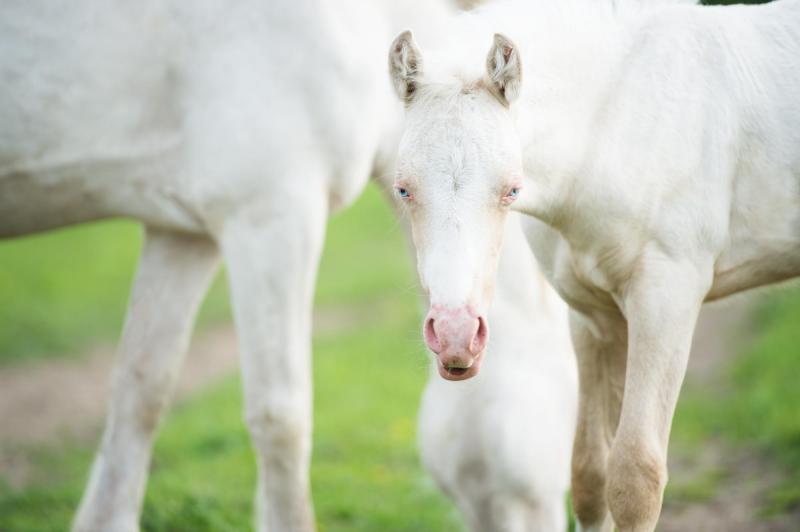
The silent birth of a fatal syndrome.
Overo Lethal White Syndrome (OLWS) is a fatal genetic condition caused by a mutation in the EDNRB (Endothelin Receptor Type B) gene, which affects the development of nerve cells in the intestine responsible for peristaltic movement.
As a result, the foal's gastrointestinal tract does not function, leading to a fatal situation. The disease occurs when a foal inherits two copies of the mutated gene.
Animals with one copy of the mutated gene do not exhibit the disease, but can transmit it to their offspring. These animals usually have the overo coat pattern, common in Paint Horses, characterized by irregular white patches.
As a consequence, foals develop signs of colic and abdominal distension between five and twenty-four hours after birth, which can lead to death. Affected foals are born seemingly healthy, but soon present severe symptoms related to intestinal obstruction.
Completely or almost completely white coat;
Blue eyes;
May present deafness;
Absence of bowel movements after birth;
Severe colic within the first twelve hours of life;
Progressive abdominal distension;
Restlessness, rolling on the ground, and frequent attempts to defecate.
Unfortunately, there is still no treatment available to correct the intestinal obstruction, making euthanasia the only option. Although the clinical signs are suggestive, the diagnosis can be confirmed by genetic testing.
EDNBR genetic test: performed with blood or mane hair samples, it identifies whether the animal is a carrier or affected by the mutation.
Reproductive history of the parents: if both are carriers of the gene, there is a 25% chance of a foal being born with OLWS.
Clinical examinations: confirmation of symptoms of intestinal obstruction in newborn foals.
The only way to avoid this syndrome is through responsible genetic planning.
Identify if breeding animals are carriers of the EDNRB gene.
Avoid crossing two carrier animals (frame overo), as there is a 25% chance that the foal is born with OLWS.
Lethal White Foal Syndrome is a 100% preventable condition through genetic testing and responsible selection of breeding animals. As there is no treatment, prediction is essential.
Veterinarians and breeders must work together to ensure the health and well-being of foals, avoiding risky crossbreeding and raising awareness about the importance of genetic testing.
