


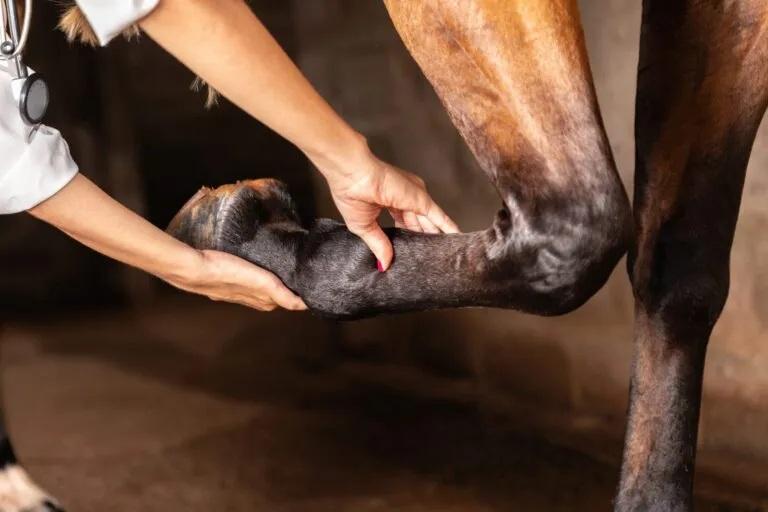
Before discussing osteoarthritis, it is very important to understand the structures that make up the joint. Anatomically, the joint structure consists of a capsule (fibrous and synovial membrane), articular cartilage, synovial fluid, and subchondral bone, and has local blood circulation and innervation, which together help maintain homeostasis and mobility. Alterations in this balance promote inflammation, degradation, and pain, situations present in osteoarthritis.
Osteoarthritis is considered a chronic disease that leads to the progressive degradation of articular cartilage and is generally associated with changes in other joint structures. As a consequence of the significant inflammation, pain develops, leading to a reduction in joint capacity. The condition can be triggered by overload and instability of the joint, repetitive trauma to the area, or even excess weight in the animal. The joints most commonly affected are related to the equine sports, such as:
The metacarpophalangeal and intercarpal joints in racehorses;
The femorotibial joint in barrel racing;
And the distal intertarsal and tarsometatarsal joints in show jumping.
Intense training and increased load can cause synovitis (inflammation of the synovium), mechanically induced by the production and release of cytokines, and consequently stimulating metalloproteinases and other inflammatory and degrading components.
Age is also cited as a predisposing factor, since aging causes changes in articular and periarticular tissues, leading to modifications in biomechanical properties. Regarding pathogenesis, diagnosis, and treatment, equine OA can be classified into five types:
Type 1 acute: which affects racing athletes and is related to synovitis, damaging highly mobile joints such as the carpal and metacarpophalangeal joints.
Type 2 called insidious: characterized by affecting joints with little mobility and high weight-bearing, such as the interphalangeal and intertarsal joints.
Type 3: is generally considered clinically irrelevant, as it is only found in necropsies, revealing non-progressive erosion of articular cartilage.
Type 4: is a consequence of intra-articular fractures, ligament ruptures, wounds, osteochondrosis, and/or septic arthritis.
Type 5: designated chondromalacia, it lacks a complete understanding, being a condition of softening of the cartilage that lines the patella.
Treating joint diseases is an art and there is no specific recipe; it is commonly treated through joint interventions, systemic therapy with non-steroidal anti-inflammatory drugs (NSAIDs), rest, and physiotherapy techniques, in addition to surgical procedures when necessary, such as curettage of the cartilage or bone tissue.
Corticosteroids, potent anti-inflammatory drugs, are widely used, administered intra-synovially, such as methylprednisolone, triamcinolone, and dexamethasone. These medications block prostaglandin production by inhibiting phospholipase, which prevents the metabolization of arachidonic acid, causing rapid analgesia. Today, the most widely used triamcinolone in Brazil, due to its highest concentration on the market, is Atriben, a powerful anti-inflammatory and the best corticosteroid for horses, indispensable in these processes.
Hyaluronic acid has a beneficial effect on promoting joint homeostasis. It is considered an important constituent of cartilage, acting as the main lubricant of synovial soft tissues when administered intra-articularly, as it shows a better response in acute joint injuries.
It is extremely important to observe the molecular weight, as it will attract more water to the region, improving the viscoelasticity of the joint, providing a quick return to trials and competitions. The purity of the formula's components ensures higher quality results. Sterility is another crucial factor, as these infiltrations are almost always performed outside of hospitals and clinics, increasing the risk of infection.
The oldest Hyaluronic Acid in Brazil, manufactured specifically for the Equine Athlete, is Lacril. This unique product has a microbiological (bacterial) origin, guaranteeing high purity. It contains no artificial preservatives (which are highly allergenic), and is completely sterile, manufactured through radiosterilization. Furthermore, it boasts the highest molecular weight on the equine veterinary market, with an impressive 3,200,000 daltons, allowing for a high-quality, long-term response.
Lacril normalizes the quantity and quality of synovial fluid, reduces joint friction, pain, and inflammation, improves joint mobility by promoting chondroprotection, and allows for a safe and rapid return to competition.
